7 Inverter Safety Tips What Precautions Are Needed?

Time:2026-10-07 Author:Oliver
0%

Inverters quietly manage energy in homes, workshops, vehicles, and commercial facilities. They convert electrical power, but they can also create heat, sparks, and dangerous voltage. A loose terminal may appear harmless while carrying enough current to damage equipment or injure someone. This is why safe installation deserves more than a quick glance at the manual.

What safety precautions are needed for inverter systems? The answer includes correct sizing, proper grounding, suitable ventilation, and careful battery handling. It also requires checking cables, fuses, connectors, and warning labels before energizing the system. Experienced electricians often inspect torque settings twice because one overlooked connection can heat under load. A clear work area matters too. Metal tools should never rest beside exposed terminals.

These seven inverter safety tips focus on practical habits that reduce avoidable risks. They cover shutdown procedures, moisture control, overload protection, maintenance, and emergency awareness. However, no checklist replaces the manufacturer’s instructions or qualified local guidance. Conditions vary. A garage installation may need different precautions from a solar array or mobile power unit. Even experienced users can miss a detail when working quickly. That is worth admitting.

Use insulated tools, wear appropriate protective equipment, and keep children away from energized components. Never guess when a reading looks unusual. Stop, isolate the power source, and investigate safely. Reliable inverter operation begins with preparation, continues through regular inspection, and depends on honest attention to small warning signs.
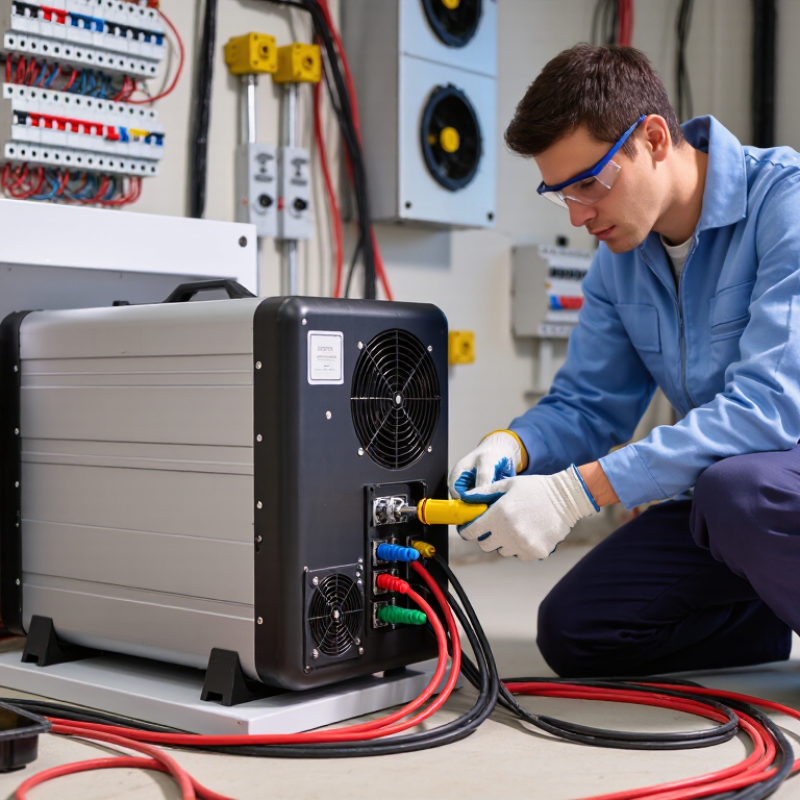
7 Inverter Safety Tips What Precautions Are Needed?

Recognize Seven Inverter Hazards: Shock, Arc Flash, Fire, and Backfeed

An inverter can look quiet while dangerous energy remains present. Shock is the first concern: DC strings, AC terminals, and charged capacitors may stay energized after shutdown. The U.S. Bureau of Labor Statistics recorded 145 fatal occupational injuries involving electricity in 2022. Use lockout/tagout, verify voltage with a properly rated meter, and treat every conductor as live until tested. Never rely on the display alone.

Arc flash can turn a loose terminal into a bright, explosive event. NFPA 70E 2024 requires shock and arc-flash risk assessment, boundary control, and task-appropriate PPE. Fire risk rises with overloaded circuits, blocked ventilation, damaged insulation, or undersized conductors. Keep clearances open, torque connections correctly, inspect heat marks, and remove nearby combustible materials. Small warning signs matter.

Backfeed is often missed during generator or battery operation. An inverter can energize utility wiring unless an approved transfer arrangement isolates all sources. Battery systems add thermal-runaway and corrosive-gas risks; provide ventilation, temperature monitoring, and correct fusing. Reverse polarity and ground faults also demand attention during hurried commissioning. A practical field lesson is uncomfortable: a clean enclosure can hide one wrong cable. Stop work, recheck drawings, and obtain qualified-person verification before re-energizing. OSHA guidance supports de-energizing whenever feasible.

Verify Voltage, Current, and Protection Ratings Under IEC 62109 and UL 1741

Inverter safety starts with the nameplate, not guesswork. Verify the DC input voltage matches the battery or solar array under cold-weather conditions. Tip 1: Check maximum voltage. Tip 2: Confirm continuous and surge current ratings. A unit may tolerate a short surge but fail during repeated overloads. Tip 3: Compare output voltage, frequency, and phase requirements with the connected equipment.

IEC 62109 focuses on safety for power converters used in photovoltaic systems. UL 1741 addresses inverters, converters, controllers, and related interconnection equipment. Tip 4: Confirm the exact standard edition listed in the technical documentation. Tip 5: Check whether the intended installation requires additional grid-interconnection testing. A familiar certification mark is not enough if the product record cannot be verified. Small detail. Important detail.

Tip 6: Inspect overcurrent protection, grounding, isolation, and enclosure ratings before energizing the system. Protection devices must suit both fault current and conductor size. Tip 7: Leave ventilation space around the inverter, then measure temperatures during realistic operation. Dust, sunlight, and a cramped cabinet can change performance quickly. In field checks, installers sometimes trust factory settings too much. I have found that written test records expose missed assumptions, especially after replacing cables, batteries, or protective devices. Use qualified personnel and follow the installation manual, local electrical rules, and documented commissioning procedures.

Maintain OSHA’s 50 V Shock Threshold and NEC 110.26 Working Clearance

An inverter can appear quiet and harmless, yet its terminals may hold dangerous energy. Treat exposed parts at 50 volts or more as a shock hazard. OSHA electrical safety practices generally require exposed energized parts to be de-energized before work, unless qualified personnel follow approved safety procedures. Verify isolation with a properly rated meter, and test the meter before and after testing the circuit. A dark display does not prove zero voltage.

Tips: Keep the inverter dry, inspect cables for cuts, and remove metal jewelry before servicing. Use insulated tools and wear PPE selected for the task. Never rely on a disconnect alone; stored energy may remain in capacitors. Wait the manufacturer’s specified discharge period, then verify voltage again. This small step is often skipped.

NEC 110.26 requires clear working space around electrical equipment so workers can operate and maintain it safely. For many installations rated up to 150 volts to ground, plan for at least 30 inches of width, 3 feet of depth, and 6 feet 6 inches of headroom, unless a specific exception applies. Keep doors, panels, and pathways unobstructed. Do not use this space for storage. A misplaced box can force a worker sideways while handling energized equipment. That detail matters. Local code adoption and equipment conditions may change the required dimensions, so a qualified electrician should confirm the installation before work begins. Gaps in planning are common. They are also preventable.

7 Inverter Safety Tips: What Precautions Are Needed? — Maintain OSHA’s 50 V Shock Threshold and NEC 110.26 Working Clearance

No. Safety Precaution Hazard or Threshold Required or Recommended Action Relevant Requirement or Technical Basis
1 Identify circuits at or above 50 V Exposed energized parts at 50 V or more can present a shock hazard, even when current is limited. Label DC and AC terminals, restrict access, and treat photovoltaic strings, battery banks, and inverter terminals as energized until verified otherwise. OSHA 29 CFR 1910.333 generally requires de-energizing exposed live parts operating at 50 V or more unless specific exceptions apply.
2 De-energize, isolate, and verify Inverters may have multiple energy sources, including utility AC, PV DC, batteries, and stored energy in capacitors. Open all identified disconnects, apply lockout/tagout where required, wait for the manufacturer-specified discharge time, and test for absence of voltage with a properly rated meter. OSHA electrical safe-work practices require de-energization and verification before work on exposed energized parts whenever feasible.
3 Maintain NEC 110.26 working clearance Restricted access can increase shock, arc-flash, and emergency-response risks around electrical equipment. For equipment rated 600 V or less, maintain at least 30 in (762 mm) of width and generally 36 in (914 mm) of depth in front of the equipment; provide at least 6 ft 6 in (1.98 m) of headroom, subject to code conditions and exceptions. NEC 110.26(A)(1) and 110.26(A)(2) specify working-space dimensions; the exact depth depends on system voltage and the condition of the exposed parts.
4 Use correctly rated PPE and test instruments Shock and arc-flash energy can remain present during testing, switching, or fault conditions. Use voltage-rated gloves, eye and face protection, arc-rated clothing when an arc-flash assessment requires it, insulated tools, and a meter with suitable voltage and measurement-category ratings. OSHA 29 CFR 1910.335 requires appropriate personal protective equipment and protective tools for electrical hazards; select PPE through a documented hazard assessment.
5 Prevent backfeed and unexpected energization A disconnected inverter can still be energized by PV modules, batteries, generators, or utility sources. Use approved disconnects, interlocks, overcurrent protection, and transfer equipment; confirm that all sources are isolated before opening enclosures or conductors. NEC Article 705 addresses interconnected electric power production sources, while NEC 690 and 706 include requirements relevant to PV and energy-storage systems.
6 Inspect grounding, bonding, and conductors Loose, damaged, undersized, or improperly terminated conductors can cause shock, overheating, fire, or equipment damage. Check grounding and bonding paths, torque terminations according to the equipment instructions, protect cables from abrasion and moisture, and replace damaged insulation or connectors. NEC Articles 250, 690, and 706 provide grounding, bonding, and installation provisions that may apply depending on the inverter system.
7 Control heat, ventilation, moisture, and access Blocked airflow, excessive temperature, water ingress, dust, and unauthorized access can lead to overheating or electrical failure. Keep ventilation openings clear, follow the listed environmental ratings, avoid installing equipment in unsuitable locations, maintain required spacing, and limit servicing to qualified persons. NEC 110.26 requires dedicated working space and access; equipment listing instructions and applicable NEC installation articles govern environmental and installation conditions.

Note: Apply the edition of the NEC adopted by the local authority having jurisdiction, together with applicable OSHA rules, equipment instructions, and site-specific electrical and arc-flash assessments.

Ground, Bond, Isolate, and Lock Out the Inverter Before Servicing

7 Inverter Safety Tips: What Precautions Are Needed?

Before servicing an inverter, establish a controlled electrical boundary. Disconnect grid input, battery storage, photovoltaic input, and backup generators. Each source may remain energized independently. A powered display does not prove the system is safe. Wait for the specified discharge period, then verify zero voltage with a properly rated meter. Test the meter on a known live source before testing, and test it again afterward.

Ground the inverter enclosure with the correct protective conductor. Bond exposed metal parts so fault current has a dependable path back to the protective device. Grounding and bonding are related, but they are not interchangeable. Follow the installation instructions, site procedures, and applicable electrical requirements. Keep leads short, inspect terminals, and remove jewelry before work begins.

Isolate every energy source, then apply a personal lock and warning tag to each disconnect. Keep the key under the worker’s control. Never rely on another person’s assurance or a remote monitoring screen. Use insulated tools and suitable protective equipment for the remaining hazards. A second person can confirm the isolation steps, though that check cannot replace testing. One mistake is easy: opening one disconnect and assuming everything is dead. Stop if labels are unclear, voltage returns, or the meter reading seems inconsistent. Ask a qualified professional to assess the system before continuing.

Manage Battery Ventilation, Heat, and Inspection Risks Under NFPA 855

Inverter safety begins with the battery enclosure, not the control panel. NFPA 855 emphasizes ventilation, thermal runaway detection, emergency planning, and adequate separation for energy storage systems. Keep air inlets clear, and never store cartons, solvents, or tools beside the inverter. A blocked vent can turn a quiet cabinet into a heat trap. It happens more easily than expected.

Monitor temperature at the battery, terminals, and inverter housing. The U.S. Department of Energy’s Energy Storage Grand Challenge Roadmap identifies safety and performance monitoring as major deployment priorities. The International Energy Agency reported that global battery demand exceeded 750 GWh in 2023, increasing the need for disciplined inspection practices. Check for swelling, discoloration, unusual odor, corrosion, loose cables, and alarm history. Use infrared measurements during normal and high-load operation. Keep records with dates and readings.

Ventilation must match the enclosure design and local fire-protection requirements. NFPA 855 may require gas detection, explosion control, or mechanical ventilation in specific installations. Do not silence repeated alarms without finding the cause. That shortcut is dangerous. A qualified technician should inspect connections, firmware alerts, cooling paths, and shutdown controls at defined intervals. My own experience suggests that visual checks often miss heat developing behind a terminal cover, so a written inspection routine is worth the extra minutes.

FAQS

Why can an inverter remain dangerous after shutdown?

Internal capacitors, battery strings, and AC terminals may still hold energy. The screen is not proof of safety. Wait for the required discharge period. Then isolate, lock out, and test every conductor with a properly rated meter.

How can workers reduce electric shock risk?

Treat every conductor as energized until testing proves otherwise. Use lockout/tagout procedures and suitable insulated tools. Check both DC and AC sections. Stop and verify.

What causes an arc flash near an inverter?

Loose terminals, damaged insulation, or accidental contact can create an arc flash. The event may produce intense light, heat, and flying metal. Complete a risk assessment before work. Use task-appropriate protective equipment and control access boundaries.

How can inverter-related fires be prevented?

Avoid overloaded circuits, blocked cooling paths, and undersized conductors. Torque connections according to the equipment instructions. Inspect for browning, melting, unusual smells, or heat marks. Keep paper, solvents, cartons, and other combustibles away.

What is backfeed, and why is it dangerous?

Backfeed occurs when an inverter energizes wiring expected to be disconnected. This may happen during battery or generator operation. Use an approved transfer arrangement that isolates all energy sources. Never assume the utility side is dead.

What battery conditions require immediate attention?

Inspect for swelling, discoloration, corrosion, unusual odors, loose cables, and repeated alarms. A hot terminal can signal a hidden connection problem. Thermal runaway is uncommon, but consequences can be severe. Leave the area and follow the site emergency procedure when conditions worsen.

How should battery ventilation and temperature be managed?

Keep air inlets, cooling paths, and exhaust openings clear. Measure temperatures at the battery, terminals, and inverter housing. Infrared checks during normal and high-load operation can reveal hidden heating. A clean cabinet can still hide trouble.

What records should an inverter inspection include?

Record inspection dates, temperature readings, alarm history, visible damage, and corrective actions. Check cables, firmware alerts, shutdown controls, and ventilation. Do not silence repeated alarms without finding their cause. My own visual check may miss heat behind a cover, so written records matter.

When should a qualified person verify the system?

Obtain qualified verification before re-energizing after repairs, wiring changes, alarms, or abnormal heating. Check drawings against the installed cables. Look carefully for reversed polarity and ground faults. One wrong cable can defeat an otherwise careful installation.

Conclusion

Inverter systems can present several serious hazards, including electric shock, arc flash, fire, unexpected backfeed, and battery-related incidents. What safety precautions are needed for inverter systems? Start by verifying voltage, current, and protective-device ratings before installation or operation. Equipment should be selected and applied in accordance with relevant requirements such as IEC 62109 and UL 1741. Workers should also recognize circuits above the 50 V shock threshold and maintain the working clearances specified by NEC 110.26.

Before servicing, turn off all energy sources, isolate the inverter, apply lockout/tagout procedures, and confirm that no voltage remains. Proper grounding and bonding are essential to reduce fault risks, while suitable barriers and personal protective equipment can help limit exposure to arc flash. Battery areas require adequate ventilation, temperature control, and routine inspection to identify damaged components, leaks, swelling, or overheating. Following principles consistent with NFPA 855 helps support safer battery installation and operation. Regular training, documented inspections, and clear emergency procedures further reduce the likelihood of injury, equipment damage, and unplanned system energization.

Oliver

Oliver

Oliver is a seasoned marketing professional with a wealth of expertise in driving brand awareness and engagement. With a deep understanding of our company's product offerings, he consistently delivers high-quality content that enriches our professional blog. His insights not only shed light on......