Solar lights are simple to install, but a few months of dim evenings can quickly undermine that convenience. A light may glow weakly, switch off too early, or stop responding altogether. The cause is not always a defective product. Short winter days, shade from new leaves, and dirt on the solar panel can all reduce charging time.
Why solar lights stop working after a few months often comes down to a small set of parts: the rechargeable battery, panel, sensor, wiring, or weather seals. Each can be affected by heat, moisture, poor placement, or inconsistent quality. A battery that no longer holds enough charge, for example, may leave a lamp bright at dusk but dark before midnight. That detail matters.
For China Best solar lights, as with other solar-powered models, careful checks can help separate an installation issue from a product fault. This guide looks at practical signs to inspect, including panel exposure, battery condition, and water getting into the housing. It also explains what maintenance may improve—and what it cannot repair. A wipe-down is easy. Replacing a worn battery may be less so. It is tempting to blame the weather for every failure, but that assumption can miss a loose connection or a weak seal. The exact cause is not always obvious without testing. By following a few measured checks, readers can make a more informed choice about repair, replacement, or a different light.
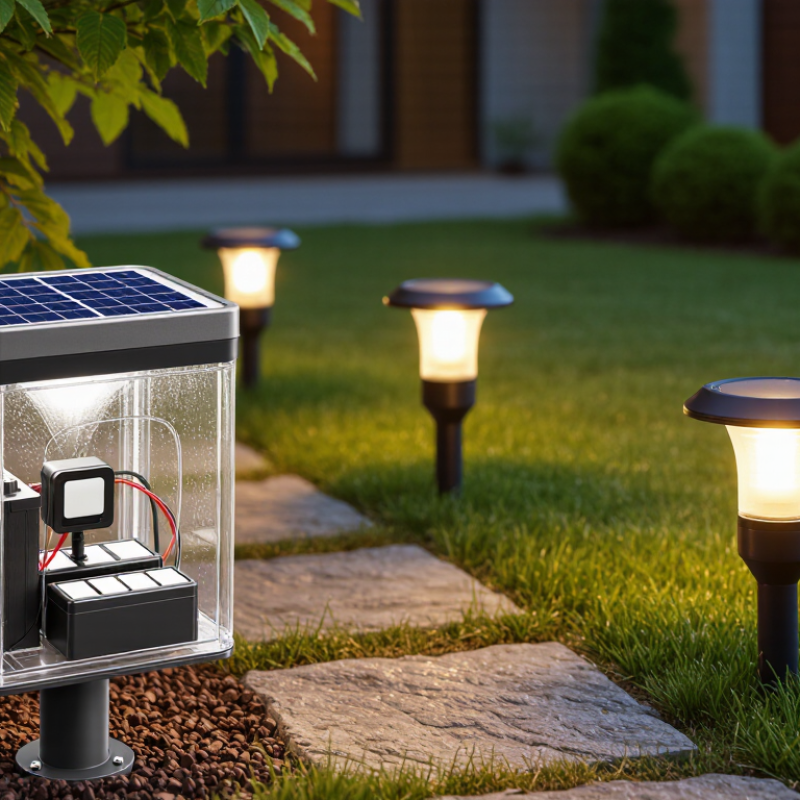
Solar lights made in China are not built to one common standard; factories, materials, and quality checks vary. A typical unit combines a photovoltaic panel, rechargeable battery, charge controller, LED board, and plastic or metal housing. Each part affects how the light performs outdoors. A small battery may work well during sunny weeks, then struggle after several cloudy days.
Manufacturing starts with component selection and circuit design. Workers or automated lines solder connections, fit the battery, and seal the housing against rain. Small details matter: a loose wire can interrupt charging, while a poorly seated gasket can let moisture reach the circuit board. Water may not cause an immediate failure. Corrosion can build quietly inside.
Factories can test charging, illumination, and water resistance, but test methods and sample sizes differ. A quick inspection may miss a weak battery cell or uneven seal. That is a design gap, too. Compact housings save cost and space, yet can trap heat around the battery. There is no perfect trade-off. Buyers should look for clear battery specifications, replaceable parts, and stated test conditions—not just a bright first-night demonstration. A few months can reveal what that demo cannot.
| Component or area | Common symptom | Likely technical cause | Design or manufacturing factor | Useful quality checks |
|---|---|---|---|---|
| Rechargeable battery | The light runs for a shorter time or stops working after dusk. | Capacity loss, poor cell quality, repeated deep discharge, or a battery unsuitable for the operating temperature. | Battery capacity may be poorly matched to the LED load and available solar charging. Incorrect charging limits can shorten battery life. | Check cell type and rated capacity; measure charge and discharge behavior; test runtime after repeated charge cycles and at relevant temperatures. |
| Solar panel | The battery does not recharge enough, especially after cloudy days. | Low light exposure, dirt or shading, panel damage, or insufficient panel output for the battery and light load. | Panel area and output may be selected to meet cost or size targets without enough allowance for seasonal sunlight and conversion losses. | Measure panel voltage and current under controlled illumination; verify charging with realistic sunlight, orientation, and shading conditions. |
| Charge-control circuit | The lamp is inconsistent, stays on during the day, or drains the battery too deeply. | Faulty dusk detection, unsuitable charge or discharge thresholds, or component variation. | A basic circuit may lack adequate protection, calibration, or temperature-aware charging behavior for its battery chemistry. | Test switching thresholds, over-discharge protection, charging behavior, and operation across the specified temperature range. |
| Enclosure and seals | Fogging, corrosion, flickering, or complete electrical failure after rain. | Water or condensation reaching the circuit, battery contacts, or wire connections. | Poorly compressed gaskets, gaps around cable entries, weak joints, or an enclosure not suited to outdoor exposure. | Inspect seals and assembly fit; conduct appropriate water-ingress testing and check for moisture or corrosion after exposure. |
| LEDs and optics | Brightness drops, color changes, or individual LEDs stop illuminating. | Excessive LED temperature, electrical overstress, poor solder joints, or deterioration of optical materials. | LED current, heat removal, and lens material may not be adequately matched to the enclosure and outdoor conditions. | Measure operating current and temperature; inspect soldering; test light output and color before and after environmental aging. |
| Wiring and solder joints | Intermittent operation when the unit is moved, or failure after vibration or temperature changes. | Loose connections, cracked solder joints, damaged insulation, or corrosion at exposed contacts. | Inconsistent soldering, inadequate strain relief, or insufficient protection of wire entry points can weaken the assembly. | Use visual inspection and electrical continuity checks; assess wire retention and repeat testing after vibration or thermal cycling. |
| Outdoor materials | Cracked plastic, faded surfaces, brittle seals, or a cloudy lens. | Ultraviolet exposure, heat, cold, and repeated expansion and contraction degrade some materials over time. | Material selection and wall thickness may not be adequate for the intended climate or expected service life. | Review material specifications; evaluate UV and temperature aging; inspect for cracks, deformation, and seal deterioration. |
| Assembly and final testing | Units from the same product vary in brightness, runtime, or reliability. | Variation in parts, assembly, charging, sealing, or end-of-line inspection. | A brief power-on check may confirm that a lamp works but not reveal weak batteries, slow water ingress, or reduced runtime. | Use documented incoming-part checks, assembly inspections, charge-and-runtime sampling, and traceable production test records. |
Note: These are common engineering failure mechanisms, not a claim that every solar light has these defects. Actual service life depends on the design, components, installation, sunlight, weather, and maintenance.
A typical unit includes a photovoltaic panel, rechargeable battery, charge controller, LED board, and outer housing. Each part affects outdoor performance. A small battery may fail after several cloudy days.
Water may enter through weak seals, loose covers, or poorly fitted gaskets. Corrosion can quietly spread across the circuit board. The light may not fail immediately. That delay is easy to miss.
Place the panel toward the strongest direct sunlight. Roof edges, walls, trees, and fences can create long shadows. Even short afternoon shadows reduce charging. Attractive placement is not always effective.
Freezing temperatures reduce overnight battery capacity. Strong heat can shorten battery life faster than expected. Humid or coastal air may encourage corrosion. Several cloudy days can reveal the real limitation.
Do not tighten mounting screws excessively, because plastic housings can crack. Keep drainage holes open. Avoid burying the lower housing in soil or mulch. The fixture should stand firmly.
Ask for panel power, battery capacity, battery type, charging time, and measured lumen output. Request the test conditions, not vague efficiency claims. Check the weather-resistance information and cable sealing.
Inspect the battery compartment when possible. A tiny cell may not support bright lighting through cloudy nights. Read warranty terms carefully, especially battery coverage. Some warranties exclude the part most likely to fail.
No. Brightness alone says little about battery life, sealing, or charging efficiency. Check runtime after rain and several cloudy days. My first diagnosis was sometimes wrong; poor sunlight looked like a defective unit.
Solar lights are designed and manufactured through a combination of solar panels, rechargeable batteries, LED chips, controllers, wiring, and protective housings. Each component affects the product’s lifespan: a weak battery loses capacity quickly, an inefficient panel cannot recharge effectively, and low-quality circuits may cause unstable lighting. Understanding these parts helps buyers evaluate whether a solar light is built for long-term outdoor use or only short-term performance.
Why solar lights stop working after a few months is often related to poor component quality, moisture penetration, extreme temperatures, dust, or incorrect installation. Shading can reduce charging, while improper positioning may expose the light to standing water or strong wind. Before buying, check the battery type and capacity, panel efficiency, waterproof construction, material durability, charging and lighting specifications, and the availability of replacement parts. Careful installation and regular cleaning can also improve performance and extend the service life of solar lights.

 Eco Sun Power